
SMILE is the latest FDA-approved LASER technology for both astigmatism and nearsightedness. Chu Vision is the first and only practice in Minnesota to offer the procedure.




Why Chu Vision for SMILE?
- Only surgeon in Minnesota who performs SMILE
- Chu Vision selected for 100+ FDA clinical trials
- Trusted by Minneapolis for 25+ years
- Calming and cheerful bedside manner
- The broadest selection of vision procedures in Minnesota
- A featured vision expert on local and national TV interviews

Nicole's Life-Changing Experience with SMILE Vision Correction


What Are the Benefits of SMILE Vision Correction Surgery?
- Reduced risk of Dry Eye
- Able to correct astigmatism and nearsightedness
- You’ll get time with Dr. Chu before, during, and at your follow-up
- Fast visual recovery
- Quiet, comfortable, blade-free procedure
- Freedom from glasses and contacts
- No flap creation is needed
See if you are a candidate. Find out which procedure is right for you.
6 questions. Personal guidance. Expert recommendation.
Take the 60-second Self Test

Candidates for SMILE
SMILE laser eye surgery is ideal for men and women with slight to severe myopia (nearsightedness) or astigmatism. Those who may not have been LASIK or PRK candidates in the past could potentially benefit from this new technique. During your consultation at our Minneapolis office, Dr. Chu will assess the overall health of your eyes and determine which laser vision correction surgery is right for your needs. If LASIK surgery or PRK is ruled out, SMILE eye surgery could be an excellent alternative. Patients considering refractive error surgery should be at least 18 years old with a consistent eyeglass prescription.
Results After SMILE
The wonderful thing is that a person’s vision often recovers very quickly after SMILE eye surgery. Since SMILE patients do not have a large incision like LASIK patients, there is less incidence of dry eyes. Patients are usually able to resume their normal activities, like swimming, outdoor sports, and more, within the first week after SMILE eye surgery.

Kayla Calls It a Gift. We Call It an Honor
chuvisioninstitute
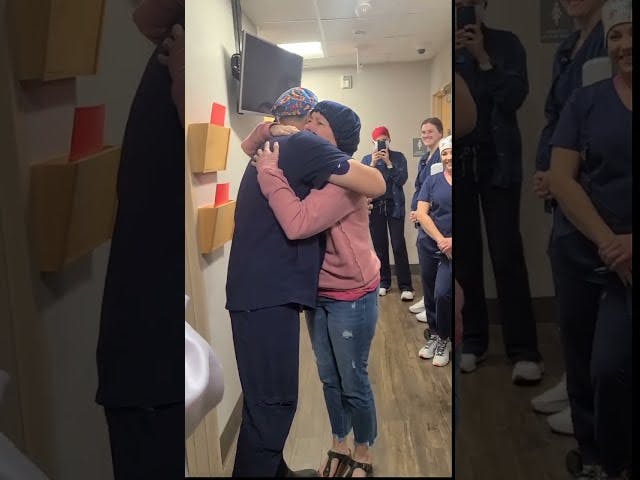
Moments after her SMILE procedure, Kayla couldn't help but hug Dr. Chu (and all her fellow nurses). Tears of joy never get old! New vision is such a gift!
SMILE is a revolutionary laser vision correction procedure with a low risk of dry eyes and a quick recovery, allowing for back to work and hobbies with amazing vision just days later!
SMILE works great for people with nearsightedness and even astigmatism! Chu Vision Institute is the only place in Minnesota that offers SMILE to our patients. Give us a call or visit our website to schedule your free vision correction evaluation to see if SMILE is right for you!

Smile Vision Correction All Your Questions Answered
Is SMILE eye surgery permanent?
Laser vision correction using SMILE is essentially permanent. Regarding the permanence of laser eye surgery, there are several misconceptions. Many individuals believe that laser eye surgery eventually “fades.” It doesn’t.
What technology does Chu Vision use for SMILE eye surgery?
At Chu Vision Institute, we only utilize leading-edge equipment and the most advanced technology. Additionally, our SMILE technology is based on the most recent SMILE FDA clearance from 2018, which permits the treatment of both astigmatism and nearsightedness (or myopia). These innovative techniques expand the optical zones while also resisting the body’s inclination to regress the treatment.
How long does SMILE eye surgery take?
From start to finish, the SMILE procedure takes between 15 and 30 minutes. The laser part, however, just takes about 25 seconds per eye. As with all of our laser eye surgeries, you should plan to be in the office for two to three hours the day of your procedure to allow for check-in and recovery following the procedure.
How long do the results of SMILE eye surgery last?
The results of a SMILE procedure, which treats nearsightedness, with or without astigmatism, will be lasting if we treat patients with stable prescriptions. As individuals become older and reach middle age, they could then need reading glasses. Additionally, as middle age advances, reading glasses may become less necessary. Of course, having undergone a SMILE procedure doesn’t stop you from having a different procedure to address the need for reading glasses in middle age. SMILE and the results of surgery are permanent. However, as we age, our eyes may change, and reading glasses may be needed.
Is SMILE surgery FDA-approved?
In 2016, the FDA approved SMILE, the most recent development in laser vision surgery. It is now offered for the treatment of myopia and myopic astigmatism and has been demonstrated to be just as safe and effective as LASIK.
Is SMILE laser surgery safe?
SMILE, or small incision lenticule extraction, is a generally safe procedure with minimal side effects, similar to LASIK. Due to the absence of a corneal flap, SMILE has a lesser chance of leaving scars.
When can I go back to work after SMILE surgery?
The day after SMILE surgery, most patients may resume their jobs. For the majority of patients, SMILE healing does not prevent them from resuming their jobs again within 24 hours. Be sure to discuss any concerns particular to your specific job with your doctor so they can answer your questions and give you the best advice about returning to work.
What is the SMILE recovery process like?
After SMILE vision correction, most patients have a quick and relatively painless recovery period. Within 24 hours, the tiny incision where the lenticule (a tiny disc-shaped tissue) was placed heals. On the day after the treatment, it’s common to feel a little dry or have sleepy eyes. Following the treatment, the eyes are maintained at ease with a surgeon-recommended regimen of medication drops and artificial tears. The majority of SMILE patients resume daily activities the next day, including driving, going to work, and engaging in light exercise. We advise SMILE patients to wait a week following their treatment before wearing makeup or going swimming.
Who is a good candidate for SMILE?
For many individuals, SMILE is a great choice for vision correction. It has been shown that the SMILE technique is both safe and reliable. With continuously high satisfaction ratings, SMILE offers outcomes that are strikingly comparable to those of LASIK. It’s important to remember that there are several different options to correct eyesight. Call our office today to schedule a comprehensive examination and see if SMILE is the right procedure for you.
Is SMILE eye surgery painful?
SMILE eye surgery is not painful. Anesthetic eye drops will be used to numb your eye before the start of your SMILE treatment. Although the SMILE technique seldom causes actual discomfort, you could experience a minor feeling of pressure. However, Dr. Chu will walk you through every stage of the process. Your eyes may feel unpleasant or dry after SMILE, but this will pass as your eyes recover. To keep your eyes comfortable, be careful to adhere to your post-operative instructions and take your drops on time. Your surgeon will give you further details about SMILE healing at your consultation.
How is SMILE different from LASIK?
Both SMILE eye surgery and LASIK laser eye surgery provide sharp, clear vision, yet their methods and technologies are different. An excimer laser is used in LASIK to remove a small amount of tissue after creating a tiny flap in the cornea, or outer layer of the eye. A tiny, disc-shaped piece of corneal tissue (known as a lenticule) is removed during the SMILE vision correction procedure via a very small opening. By altering the eye’s surface so that light entering the eye focuses effectively on the retina, SMILE and LASIK both correct eyesight. The incision made with LASIK is much larger compared to the much smaller incision used during SMILE laser eye surgery. The two surgeries are different, yet both yield amazing results.